


Founded in 2001, Wikipedia launched as a provocation: what if knowledge on the Internet didn’t belong only to experts, but to everyone? What began as an ambitious experiment in collaboration became one of the most essential sources of truth online.
Wikipedia democratized insight, despite early skepticism. With an open policy inviting anyone to edit, the platform is a self-moderating knowledge base. Each article is built on sourced facts shaped through consensus, without advertising and a single point of view.
Operated by a nonprofit and ranked among the world’s top ten websites, their pioneering work landed them among our list of the 30 Most Iconic Companies on the Internet. As they approach their 25th anniversary, Webby Executive Director Jesse Feister sat down with Selena Deckelmann, Chief Product and Technology Officer of the Wikimedia Foundation, to uncover how they earned global trust.
Below, Deckelmann traces each turning point that shaped one of the Internet’s most essential platforms, and what’s next.
Early Internet and Community Building
The Webby Awards: When did you realize that the Internet would fundamentally change how the world works? What are some ways it changed how you worked and created?
Selena Deckelman: For myself, [it] changed over time. I started out posting to places like Usenet. It was like really ancient times. I started using Twitter early in my open source communities, like in the Postgres community, and I was explaining to them what this new publishing platform might be. And they were not really sold on it. They said, “We’re gonna stick to having an email list.”
Over time, I had so many friends who were making such amazing things on the web. I had lots of really creative friends who have created interactive XMPP platform things. There was this thing called MeetSpace where we would get on a webpage. People would make animated GIFs and then send little chat messages. And that was how we communicated with each other.
Webby: Early Internet language, right?
Deckelman: Yeah. And that was actually something we did even in the last 10 years. What’s so neat about the web is it’s such a generative place. It’s a place where people like to experiment, where they’re always messing around, and that’s what I hope for in the future for everybody.
“ We keep iterating on what's actually working in the moment rather than imagining what might fail all the time.”
Webby: The Twitter story is great because we’ve been talking a lot about skepticism as an aside. There’s always skepticism when things are new, and we forget it every time. But it’s always hard to embrace it if you haven’t seen it work. And so people lead the way, and then it becomes normalized.
Deckelman: That’s such a great point. When it comes to that skepticism, there was so much skepticism about Wikipedia’s potential for success. People really did not believe that an encyclopedia that anyone could edit could turn into something that could be reliable and have important, useful facts in it. But it did happen. What a lot of people say about Wikipedia is that it works not in theory, but in practice. I love that it’s such a hilarious and pithy way that the volunteers think about the system that’s been created.
And I think that’s the key to its success, that we keep iterating on what’s actually working in the moment rather than imagining what might fail all the time.
2025 Nominee for Public Service, Social Impact & Activism in Social
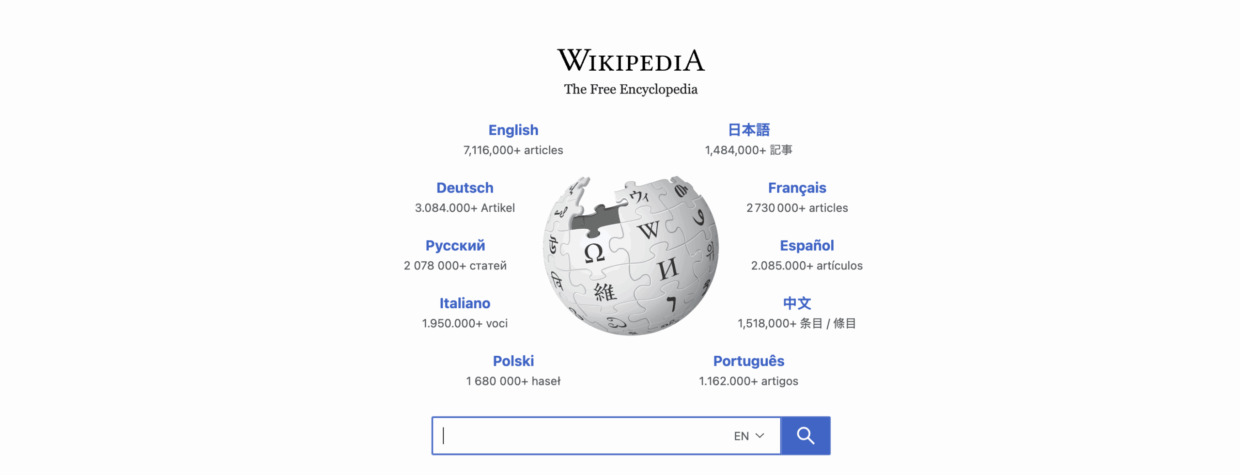
2023 Honoree for Accessible Technology and 2004 Winner for Community in Websites and Mobile Sites
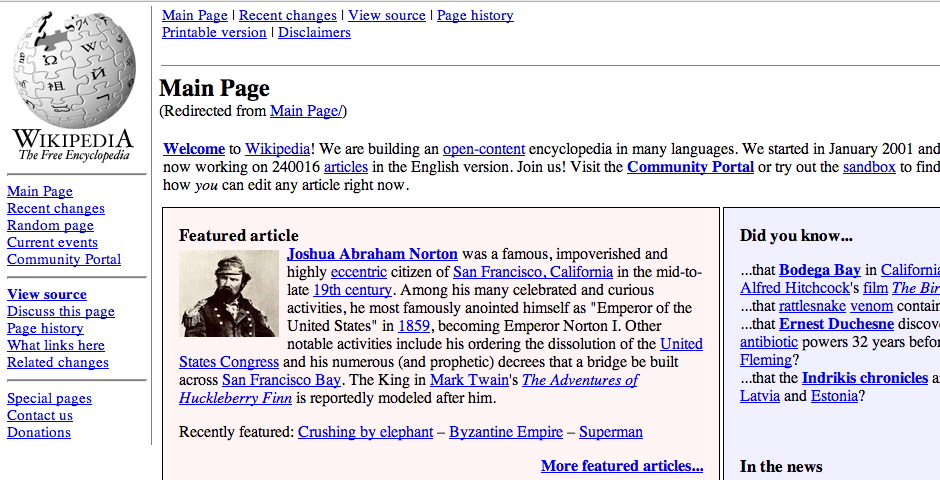
2004 Nominee for Best Practices in Web
Guiding Principles and Neutral Point of View
Webby: What were the guiding principles that shaped the company’s strategy from the beginning? How have they evolved, and how do you think they’re going to guide the future of Wikipedia and Wikimedia?
Deckelman: There are five pillars that have been around since the very beginning, and they’re the best place to understand how the collaboration works and how it’s been so durable for almost 25 years. The first pillar is that Wikipedia is an encyclopedia. It’s not a soapbox, it’s not an advertising platform. Our mission is to help create and disseminate knowledge freely.
The second pillar is that Wikipedia has a neutral point of view. Personal experiences, interpretations, and opinions don’t belong on Wikipedia. The volunteers who edit need to impartially describe and summarize information instead of debating.
The third pillar says that Wikipedia is free for anyone to use. And this is pretty radical, even in today’s world of technology. No volunteer owns any particular article. Any contributions can and may be mercilessly edited.
“ There isn't an article about what some people think about climate change, and then another one about what other people think.”
The fourth pillar is about assuming good faith, respect, and civility. Which can feel in short supply in many institutions in society. By design, there’s only one article per topic. There isn’t an article about what some people think about climate change, and then another one about what other people think. For this to work, volunteer editors have to debate and disagree until they form a shared consensus.
There is research about this system that has been discovered to have a moderating effect on political opinions. So people who have expressed [polarized] viewpoints over time moderate their views through their work on Wikipedia. And this is in contrast with what we notice on other social media platforms, where polarization might be encouraged by design.
The Risk of Letting Anyone Edit
Webby: What does that look like moving forward? Do you see that being more significant right now because of how the Internet has evolved beyond Wikipedia?
Deckelman: Well, the final pillar in this whole system is that Wikipedia has no firm rules. I think it’s the funniest and absolutely my favorite. This was something that the co-founder, Jimmy Wales, and the editors of those early days knew. The Internet was gonna keep changing, and Wikipedia was going to need to keep up. If there is something that’s preventing you from improving or maintaining Wikipedia, ignore it. That rule helps everyone evolve together as we face new challenges. Much of the internet has been built in English. And so in our projects, we support more than 300 non-English languages. For us, multilingualism is truly the next frontier. That’s what we hope for the entire web and also AI: that all of this generative technology will connect people in languages other than English.
An important thing for us is that the Internet is not just for entertainment but also for information.
The Decision to Allow Open Editing
Webby: The community orientation lives on in such a beautiful way. A lot of really intelligent decisions must have been made at the beginning to make that possible. Is there a decision the company made that others thought was risky but turned out to be transformative?
Deckelman: Yeah, absolutely. The most transformative, risky act was to let anybody edit. They put that edit button right at the top of the page, and anybody could push it. And I want to encourage people to try and engage with what is truly an incredible wonder of the world. It’s so fun and it’s something that you can do in your spare time. You can find a typo. You can talk about something that you learned from your family, or something that you learned while you’re traveling.
Webby: Our theme for this year’s Webby Awards is that we’re Big On What’s Next. What’s the role of Wikipedia in shaping the Internet over the next 30 years? Is there anything that Wikipedia and Wikimedia are really big on for the future?
Deckelman: The most important goal is multilingualism. We want to support the many languages of the world in building the kind of corpus of knowledge we’ve achieved with English Wikipedia. We have incredible communities in German, Spanish, Arabic and more. The number of articles is definitely not as large as it could be. Our aim is to recruit people who are most excited to contribute. It’s more community organizing. The outcome we’re aiming for there is to communicate and document knowledge unique to their cultures.
“ What's really special about it is that it shows that you don't need to be a trillion-dollar company to have the impact of a trillion-dollar company.”
On Being Recognized among the 30 Most Iconic Companies on the Internet
Deckelman: Reflecting on this cohort, I think we were one of three nonprofits. It’s such an honor to be considered part of this group. We’re representing the work of millions of volunteers who have contributed to Wikipedia’s success. All the Wikimedia projects that these volunteers have created over 25 years, it’s amazing the impact they have had. What’s really special about it is that it shows that you don’t need to be a trillion-dollar company to have the impact of a trillion-dollar company. We see ourselves as part of a movement. It is very important to us to always center the volunteer experience. It’s a privilege to represent them.
Webby: Selena, thank you. We’re grateful and happy to recognize the community.
Bold Ideas Win at The Webby Awards
If you’re building work that’s redefining creativity online, don’t miss your last chance to be recognized on the Internet’s biggest stage. Enter the 30th Annual Webby Awards by the Extended Deadline on Friday, February 6.
 Twitter